
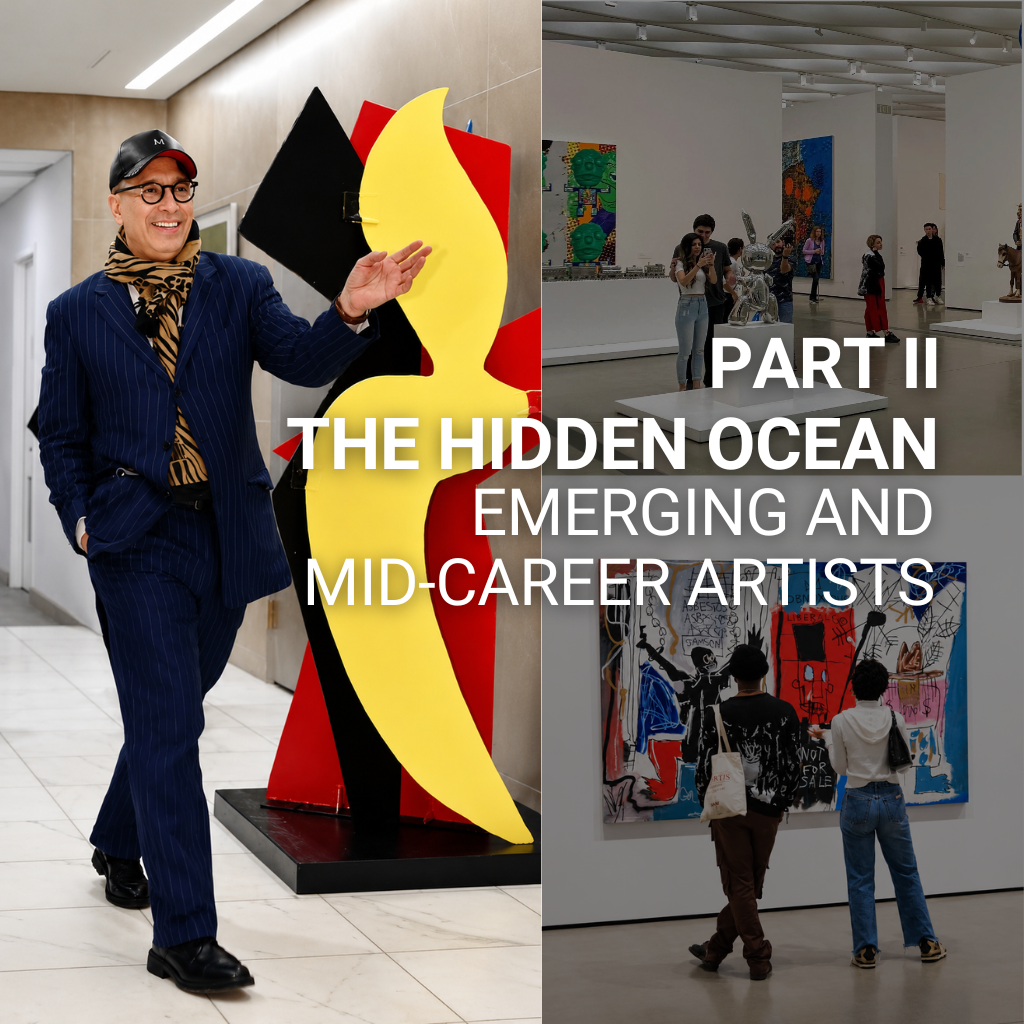
The Hidden Ocean: Emerging and Mid-Career Artists
For decades, the world’s major banks and wealth management firms have approached the art market with a singular obsession: blue-chip art. Picassos, Basquiats, Warhols, Rothkos, Monets, and Koons have become the preferred instruments of prestige finance. Banks built advisory divisions around them, structured lending products against them, and promoted them as alternative assets tWhat banks are failing to recognize is that the real growth market in art is not the narrow blue-chip apex, it is the vast, undercapitalized ecosystem of emerging and mid-career artists.
The global art market may generate roughly $65–70 billion annually, yet the overwhelming share of attention, financing, and institutional infrastructure is concentrated in an extraordinarily small segment of artists and transactions.
A tiny percentage of blue-chip sales accounts for a disproportionate share of market valuation and media visibility. The top end of the market (often less than 1% of artists and transactions), dominates headlines, auction records, lending portfolios, and banking strategies.
But this concentration masks a critical vulnerability.
The blue-chip market behaves increasingly like a mature luxury asset market with limited organic expansion. Prices rise primarily through scarcity and wealth concentration rather than through broad-based collector growth.
Meanwhile, emerging and mid-career artists represent the opposite: expanding cultural, relevance, demographic alignment with younger buyers, accessibility, community engagement,
digital fluency,and enormous upside potential.
This is not merely an artistic category. It is an economic frontier.
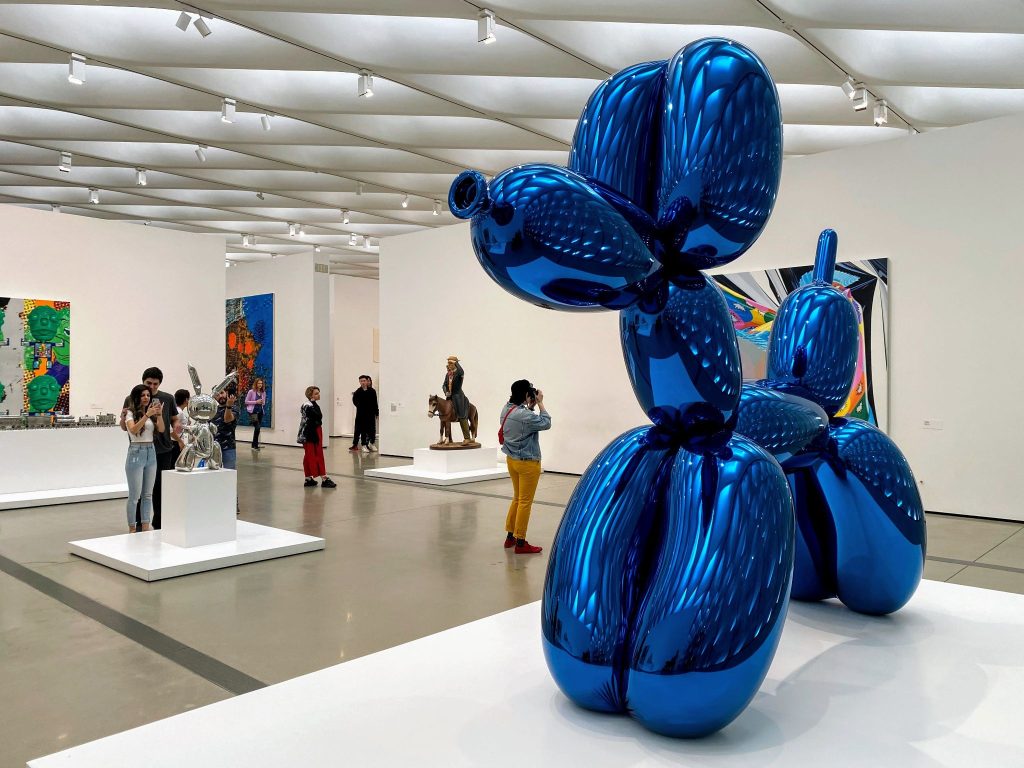
https://www.artsgain.com/en/blog/what-is-blue-chip-art/
The Democratization of Cultural Discovery
Historically, cultural discovery flowed downward from institutions: museums, critics, galleries, auction houses, and elite collectors determined legitimacy.
Today, discovery flows horizontally.
Collectors increasingly discover artists through: social media, digital communities, artist-led platforms, cultural movements, direct engagement, peer recommendation or through applauding their courage to take on difficult projects.
Younger collectors do not want to inherit someone else’s taste. They want participation in discovering their own generation’s voices.
This dramatically favors emerging and mid-career artists.
It also fundamentally threatens traditional banking strategies around art wealth management.
Banks continue to underwrite the past while culture reallocates value toward the future.

The Fatal Miscalculation of Major Banks
Most banks entered the art market not because they understood culture, but because they saw wealth concentration.
Their art divisions were largely designed around: collateralized lending, wealth preservation, estate planning, and access to billionaire clients.
As a result, they built systems optimized for a narrow layer of ultra-established works.
But the future growth of the art market may not come from another $150 million painting sale.
It may come from millions of younger collectors participating in a vastly broader ecosystem of artists at lower price points, with stronger emotional engagement and greater cultural identification.
This is where the major banks are exposed.
By ignoring emerging and mid-career markets, they are: concentrating risk,
misunderstanding demographic behavior, and failing to build relevance with the inheritors of future wealth.
The same institutional rigidity that caused traditional finance to underestimate fintech, cryptocurrency, creator economies, and digital commerce is now repeating itself in the art world.
By: Fernando Luis Alvarez founder of the emerging artist contemporary art gallery and the Clementina Arts Foundation
May 12, 2026